
150th Anniversary
The Saskatchewan Legislative Library celebrates its 150th anniversary in 2026. This milestone provides an opportunity to highlight the Library’s history, notable people, and the evolution of its services, collections, and spaces.
Historical timeline
1876-1900
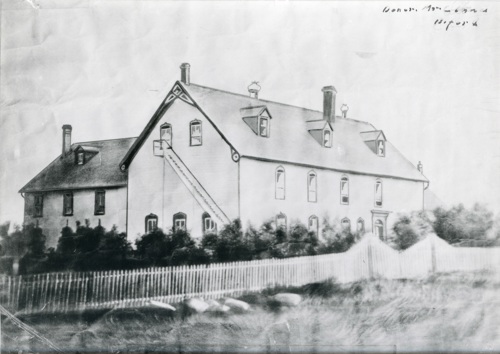
Image source: Provincial Archives of Saskatchewan, R-A2287
1876: On October 7, 1876, the capital of the North-West Territories moves from Winnipeg to Battleford in present-day Saskatchewan. David Laird is appointed Lieutenant Governor, and brings with him his collection of law books, which form the basis of the Library. Initially called the North-West Government Library, it is used by the territorial council and officers of the territorial government. From the beginning, it is focused on supporting parliamentary democracy.
1877: After a brief stop at Fort Livingstone the Library moves to Government House in the new capital of Battleford.
1883: The seat of government moves from Battleford to Regina, and the Library relocates to the Government Buildings on Dewdney Avenue.
1886: Henry Fisher is appointed the first librarian. In the early years, the Library is overseen by the Lieutenant Governors of the day, who take great interest in its development.
1888: John Weston Powers, also known for publishing The History of Regina in 1887, is appointed Librarian. In 1889, Powers submits the first report for the Library, drafted in a beautiful handwritten script. He notes improvements made to the organization and care of collections and provides a detailed description of the important materials collected to date, including 1,387 law books, the Canada Gazette, Statutes of Canada, provincial statutes, and House of Commons Debates.
1890: Kate Simpson Hayes becomes the Clerk in Charge and compiles the Library’s first catalogue. She serves in this position until 1899.
1893: The Legislative Assembly adopts The Report of the Standing Committee on the Library, which places the Library under the exclusive charge of the Librarian under instruction of the Executive Committee.
1899: John Hawkes is briefly Clerk of the Library in 1899. This role is held by several short-term clerical appointments until 1907.
1901-1925
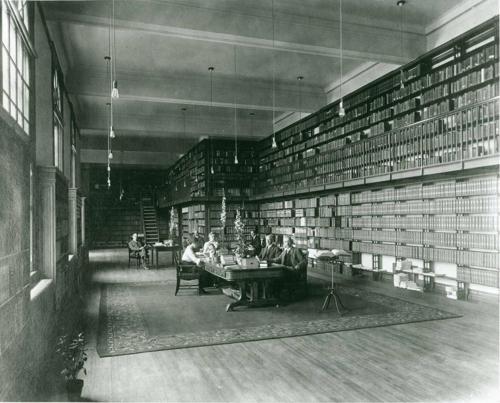
J. Hawkes, R.W. Shannon, J.P. Runciman, Mrs. H.B. Young, Thora Paulson, W.H. Munroe.
Image source Provincial Archives of Saskatchewan, R-B18
1907: John Hawkes is appointed the first Legislative Librarian of the Saskatchewan Legislative Library. Hawkes is a visionary leader, dedicated to setting the Library on a firm foundation. By the time he retires in 1927, his respect for the work of the Legislature and his recognition of the need for expert reference services had set the path for all that follows. Hawkes is also remembered for publishing a three-volume history The Story of Saskatchewan and its People in 1924.
1909: The Library moves into a temporary location in the basement of the Land Titles Building on Victoria Avenue. Hawkes publishes History of the Legislative Library.
1910: While the Legislative Building is still under construction, the Library becomes its first tenant, moving into rooms across the hall from its permanent location.
1912: The Legislative Assembly holds its first session in the Legislative Building using space planned for the Library Reading Room, as the Chamber is not yet completed.
1912: The Library’s final move is delayed by the Regina Cyclone on June 30th. The Legislative Building is not in the direct path of the storm, but it is still badly damaged and needs extensive cleaning and repair. At the end of 1912 the Library relocates within the Saskatchewan Legislative Building to the space that becomes its permanent home.
1914: After being decommissioned as the table used in the Chamber, the Confederation Table is first displayed in the Reading Room. The table is believed to have been used by the government in Quebec City during the Quebec Conference in 1864.
1915: The Travelling Library is created to provide books to rural communities in the absence of a provincial public library system.
1920: The Open Shelf Library is formed to provide non-fiction books delivered by mail. The Open Shelf Library and Travelling Library programs end in 1953 with the establishment of the Provincial Library.
1920s: Perhaps the most unusual display in the Reading Room’s history is “Sergeant Bill”. He was the mascot to the 5th Canadian Battalion (Western Cavalry) and accompanied them to France in World War I. After his death, Bill is stuffed and briefly displayed in the Library. He now resides in the Broadview Historical Museum in Broadview, Saskatchewan.
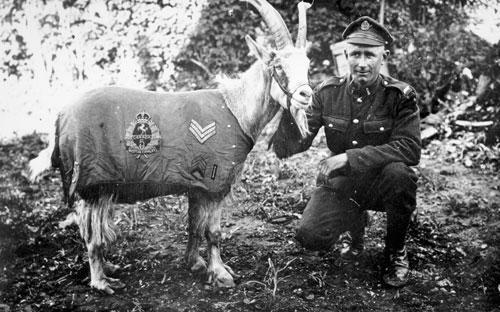
Image source: Provincial Archives of Saskatchewan, R-A10210(1)
1925: Sarah Ramsland, Saskatchewan’s first female Member of the Legislative Assembly, who served from 1919-1925, works in the Library until 1930, and for the Travelling Library service until 1943.
1926-1950
Saskatchewan Legislative Building, 1947.
Image source: Provincial Archives of Saskatchewan, R-A45(2)
1927: The Library achieves full depository status for Government of Canada publications. This program runs from 1927-2013, when the federal government moves to electronic publishing.
1927: William F. Kerr is appointed Legislative Librarian. He states in his first library report on Feb. 3, 1928, that the Library steadily adds new volumes to increase its value to the members of the Assembly and government departments.
1930: James Walter Reid is appointed Legislative Librarian. The Great Depression causes him to report on Jan. 9, 1931, that “owing to the present economic conditions and a reduction in the appropriation … there have been no important purchases made.”
1932: Jessie Robson Bothwell is appointed Acting Librarian and performs the duties of the Librarian and Assistant Librarian. Bothwell reports progress in gathering Saskatchewan archival records and notes a marked increase in the reference and informational service. She states that the continued economic situation has reduced library staff to a minimum and the Library is making every possible savings.
1934: Samuel Latta is appointed Legislative Librarian. As Canada is engulfed in World War II, the Library collects and preserves war-time material, and extends services to members of the Air Force, Army, and Navy present in Regina. The Library supports clients with war-related information needs such as resources on Canadian War Orders and Regulations, emergency legislation, and post-war reconstruction.
1944: Jessie Robson Bothwell is appointed Legislative Librarian. She promotes library services and advances the collection of archival records for the province. Regina residents might also recognize Bothwell as the mother of George Bothwell, a leading Saskatchewan library figure for whom Regina Public Library named a branch in 1994.
1947: The Archives Division of the Library is established.
1951-1975
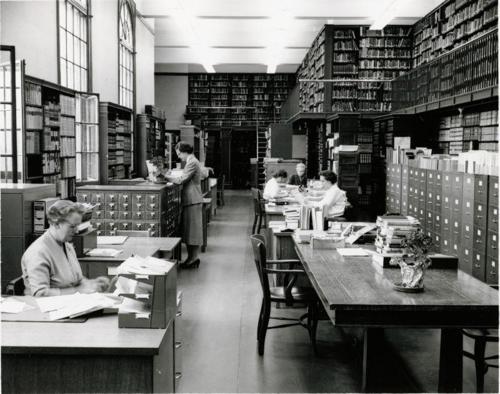
Image source: Provincial Archives of Saskatchewan, R-A14080-4
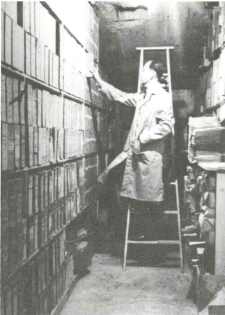
1951: John Hall Archer is appointed Legislative Librarian. Archer serves as Legislative Librarian from 1951-1964, Assistant Clerk of the Legislature from 1956-1961, and Provincial Archivist from 1957-1962. In 1974, he is appointed the first President of the University of Regina, and the university library now bears his name.
1964: Allan R. Turner is appointed Acting Legislative Librarian while also serving as the Provincial Archivist.
1966: The Archives Division of the Library is closed and its collection transferred to the Provincial Archives of Saskatchewan.
1966: Leonard Gottselig is appointed Legislative Librarian after briefly serving as Acting Legislative Librarian.
1972: The Legislative Librarian writes to the Premier requesting that the Library be made the official depository for Government of Saskatchewan publications.
1973: Christine MacDonald is appointed Legislative Librarian after serving as Assistant Legislative Librarian since 1966.
1976-2000
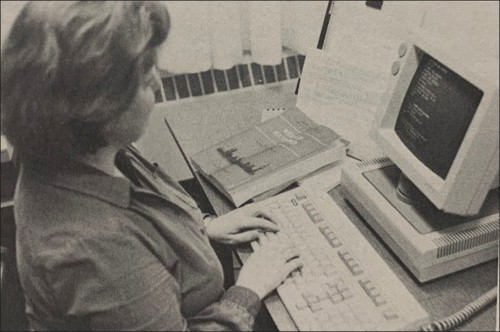
Image source: Saskatchewan Legislative Library Annual Report for the
Period Ending March 31, 1985
1976: The Library’s annual Checklist of Saskatchewan Government Publications begins, with monthly issues starting in July 1982. In 2022, it returns to publishing annually.
1981: The Report of the Special Committee on the on the Review of the Legislative Library sets the future vision and mandate for the Library.
1982: The Legislative Assembly and Executive Council Act is amended designating the Library as the official depository of Government of Saskatchewan publications. This change requires all government departments to deposit copies of all publications to the Library, ensuring materials are preserved and accessible to legislators and the people of Saskatchewan.
1982: Marion J. Powell is appointed Legislative Librarian. Retiring in 2006, Powell is the longest serving Legislative Librarian. During her tenure, she shepherds the institution through key technological and service advancements.
1982: The online era begins with the installation of the first computer terminal, the Datacom 1200, and contracts with five major database vendors.
1982-1984: The Reading and Reference Rooms undergo renovations as part of a long-term renovation project within the Legislative Building. New book shelving, client study areas, and library service desks are among the new furnishings.
1986: The Library publishes The Legislative Library of Saskatchewan: A History authored by former Legislative Librarian Christine MacDonald.
1987: The Library prepares background information for Members of the Legislative Assembly attending the Canadian Regional Conference of the Commonwealth Parliamentary Association. The Library later establishes background research for parliamentary conferences as an ongoing service.
1989: A personalized current awareness service for Members is introduced.
1990: The Library joins with the University of Regina Library and several other libraries to form the Regina Library Information Network (RegLIN), a multi-library, multi-institutional computer network for automated library services. This initiative enables the Library to automate its library catalogue utilizing NOTIS software. The automated catalogue is named MURLIN (Multi-user Regina Library Information Network).
1992-1993: Library begins publishing The Members’ Newsletter and New Books at the Library.
1996: The Library obtains an email address for the Reference Service, reference@legassembly.sk.ca
1997: The first website of the Legislative Assembly is launched, which includes access to the Legislative Library catalogue and webpages featuring library resources.
1998: The Library continues to participate in RegLIN. Members of the consortium acquire the Voyager software by Endeavor Information Systems Incorporated and migrate their catalogues to the new platform.
1999: Approximately 80% of the Library's collection is moved to the nearby Walter Scott Building.
2001-2026
 |
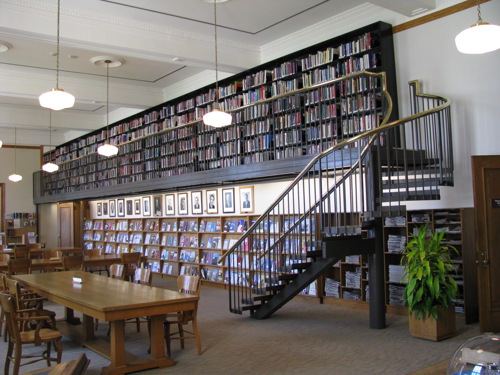 |
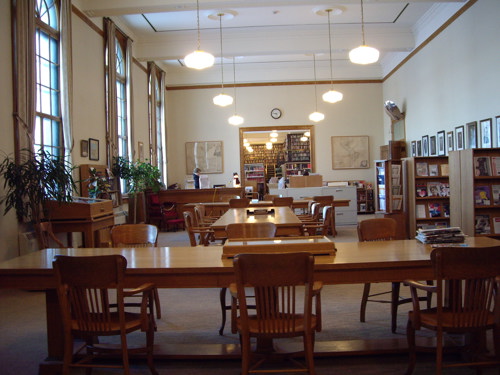
The Reading Room before and after the addition of the mezzanine, 2010.
Image source: Ted Giese (before), Legislative Library (after)
2005: Sections of the Legislative Assembly and Executive Council Act are changed to require digital Government of Saskatchewan publications to be deposited. The Library establishes a digital repository to preserve these publications and make them available.
2006: Melissa K. Bennett is appointed Legislative Librarian.
2009: The Library hosts its first Saskatchewan Book Awards author readings in the Library.
2010: The mezzanine is extended along the south wall into the Reading Room, adding 320 feet of new shelf space. This renovation project subsequently receives a City of Regina Municipal Heritage Award and a Lieutenant Governor of Saskatchewan Heritage Architecture Excellence Award.
2012: A specialized climate control system is added to the Library space in the Walter Scott Building to help maintain ideal conditions for book preservation and prevent damage from fluctuations in temperature and humidity, which can lead to deterioration, mold growth, and pests.
2014: The Confederation Table is loaned to the Canadian Museum of History in Gatineau, Quebec as part of a display for the 1867: Rebellion and Confederation exhibit. Following the exhibit, the table is refurbished and returned to the Reading Room in March 2016.
2015: The Library extends the life of the collection by launching a long-term mass deacidification initiative to remove harmful acids in the paper of its print collection materials.
2015: The Library participates in transforming RegLIN into the Consortium of Academic and Special Libraries of Saskatchewan (CASLS). Consortium members renew their commitment to cost share library catalogue software.
2017: In collaboration with CASLS, the Library migrates its automated catalogue to a next generation, cloud hosted software system.
2020: In March, in response to the COVID-19 pandemic, the Library shifts from in-person to virtual services with the closure of the Legislative Building to the public. In September, the Library re-opens its physical space and reinstates in-person services for clients permitted to access the Legislative Building.
2021: The Library launches a digitization program and begins routine digitization of historical publications in its collection.
2022: A new monthly publication titled The Reading Room: The Newest Titles at the Saskatchewan Legislative Library is launched. The Reading Room is also available on the website or by email. A companion Featured Collection lists all titles received each month.
2022: The Library renews its background research kits for parliamentary conferences by increasing the content, transitioning to a digital format, and offering customization for individual recipients of the service.
2023: The Library migrates its digital repository to a new cloud-hosted software platform linked with its library catalogue.
2024: As part of provincial efforts to respond to the Truth and Reconciliation Commission of Canada’s 94 Calls to Action, the Library begins updating catalogue records using Saskatchewan Indigenous Subject Headings (SKISH).
2026: The Library reaches its 150th anniversary and celebrates not only its past achievements but also its ongoing commitment to serve Saskatchewan with integrity, expertise, and responsiveness for generations to come. As the modern world experiences significant technological changes, the Library continues to bring innovation and high standards of information literacy to meet the challenges of the current information environment.